How Norweco Singulair Green Differs From Standard Septic Tanks
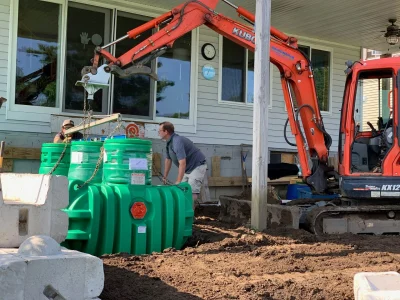
If you have only ever lived with a conventional septic system, the first encounter with a Norweco Singulair Green can feel like stepping from a pickup truck into a compact utility vehicle built for a very specific job. Both move wastewater away from the house. Both rely on a buried tank. Both demand maintenance. But the way they treat sewage, the quality of the water leaving the system, and the situations they are meant to handle are meaningfully different.
That difference matters most when a property has constraints. I have seen it come up on small lots, waterfront parcels, sites with shallow soils, replacement systems where the original drainfield struggled, and homes that need a higher treatment standard than a basic septic tank can provide. Homeowners often assume the tank itself is the whole system. In practice, the tank is only one piece, and with a standard septic setup it is a fairly simple one. A Norweco Singulair Green is more accurately understood as a treatment plant scaled for a home or small facility.
Understanding that distinction helps explain nearly every practical difference, from installation cost to power use to maintenance expectations.
The baseline, what a standard septic tank actually does
A standard septic system is intentionally simple. Wastewater from toilets, sinks, showers, laundry, and appliances flows into a buried tank. Inside that tank, solids settle to the bottom as sludge, fats and lighter materials rise to the top as scum, and the liquid layer in the middle moves on to the soil absorption area, often called a drainfield or leach field.
The tank itself is not designed to fully treat sewage. Its main job is separation and short-term storage. Some digestion of solids happens in the tank under anaerobic conditions, meaning without oxygen, but that process is limited. The real finishing work is supposed to happen in the soil beneath the drainfield. If the soils are suitable, unsaturated, and sized correctly, the soil can polish the wastewater before it reaches groundwater.
That approach has worked for decades because it is mechanically simple and relatively forgiving, at least on a suitable site. There are no blowers in the tank, no control panel, and often no moving parts beyond effluent filters or pumps if the layout requires dosing uphill. For many rural properties with deep, well-drained soil and enough room for a properly sized field, a conventional septic system remains a practical answer.
Its limits show up where the site is less cooperative. High groundwater, tight clay, shallow bedrock, marginal replacement areas, and environmentally sensitive locations all put pressure on a standard septic design. When the soil cannot take on enough treatment responsibility, the wastewater often needs more treatment before it reaches the drainfield. That is where systems like the norweco singulair green enter the conversation.
A Norweco Singulair Green is not just a better tank
Homeowners sometimes describe the Singulair Green as an upgraded septic tank. That shorthand is understandable, but it misses the core point. It is an aerobic treatment unit, or ATU, designed to actively treat wastewater rather than simply hold and separate it.
The key difference is oxygen. In a standard septic tank, treatment is mostly anaerobic. In a Singulair Green, air is introduced into the wastewater to support aerobic microorganisms. Those organisms break down organic matter more aggressively and more completely than a conventional tank alone. The result is a cleaner effluent leaving the treatment unit.
That sounds abstract until you picture the flow path. Instead of raw household wastewater entering one quiet chamber and then heading to the field after basic settling, the wastewater in an aerobic unit moves through stages of treatment. Solids are still managed, but the system also aerates, mixes, and clarifies. Depending on the approved design norweco singulair green and local requirements, the treated water may then go to a reduced-size drainfield, a drip dispersal area, a mound, or another approved dispersal method.
In practical terms, the norweco singulair green behaves less like a passive container and more like a compact wastewater plant for one house.
The treatment quality is the real dividing line
When professionals compare these systems, the first serious distinction is effluent quality. A conventional septic tank by itself produces wastewater that still contains substantial organic material and suspended solids. That is acceptable only because the downstream soil treatment area is expected to complete the job.
A properly functioning aerobic treatment unit produces cleaner effluent before the water ever reaches the soil. That cleaner effluent can reduce stress on the drainfield and can make wastewater dispersal possible on sites where a basic septic tank would not be enough. This is especially important in jurisdictions with tougher standards for nitrogen reduction, nearshore protection, or sensitive groundwater recharge zones.
I have seen homeowners focus on the tank volume, the brand, or whether the lid is easy to access. Those are not irrelevant details, but the cleaner discharge is the reason systems like this exist. If you strip away the marketing language, that is the practical value proposition.
A cleaner effluent can also translate to a different design downstream. In some locations, an advanced treatment unit can support a smaller or more flexible dispersal area than a conventional system would need. Not always, and not automatically, because local code drives the design, but often enough that it changes whether a lot is buildable or whether an addition can move forward.
How the Singulair Green works in everyday terms
The easiest way to understand the norweco singulair green is to think in stages. Wastewater enters the system and solids are managed much as they would be in any treatment setup. Then the system introduces air, typically through an aeration component powered by electricity. That oxygen-rich environment supports aerobic bacteria that consume dissolved and suspended organic matter more efficiently than the quieter, oxygen-poor environment inside a conventional septic tank.
After aeration, the system allows treatment byproducts and remaining solids to settle in a clarification step. The clarified liquid then exits for final dispersal or additional required treatment, depending on the site design. Some installations include alarms, controls, or recirculation features, because advanced treatment systems need to maintain process stability.
That is a fundamentally different operating philosophy from a standard septic tank. A conventional tank depends on time, gravity, and the soil. A Singulair Green depends on managed biological treatment before the wastewater reaches the soil.
The homeowner experience changes because of that. There is more oversight. There is power consumption. There are service requirements. There is also a higher treatment level and often a better fit for difficult sites.
Why electricity changes the ownership experience
One of the clearest day-to-day differences is that a standard septic tank can often sit for years doing its quiet work with very little owner interaction beyond pumping and occasional inspection. A Norweco Singulair Green relies on active components, and active components need electricity.
That means the system is sensitive to power loss in a way a basic septic tank is not. A brief outage may not matter much, but repeated outages or long interruptions can affect treatment performance. It also means there are components that wear out, especially aeration equipment and controls. They are not exotic or unmanageable, but they are real maintenance items.
For some homeowners, this is the first emotional hurdle. They like the idea of wastewater treatment being invisible and passive. A standard septic system, when well sited, largely offers that. An aerobic unit asks for a different mindset. It rewards attention and punishes neglect more quickly.
This is not necessarily a drawback if the property genuinely needs advanced treatment. It is simply the trade-off. Better treatment comes with more moving parts.
Maintenance is not optional, it is part of the design
A conventional septic tank also needs maintenance, despite how often people ignore it. Tanks need inspection and pumping. Filters need cleaning if installed. Drainfields need protection from compaction, roots, and hydraulic overload. The difference is that neglect can remain hidden for a long time, until the yard gets wet or the plumbing slows down.
With a norweco singulair green, maintenance is built into the ownership model from the start. Many jurisdictions require a service contract or scheduled professional inspections because the treatment level depends on mechanical and biological performance. The system may include alarms that tell you when something is wrong. That is actually helpful. At least you know when performance has slipped.
A typical owner should expect periodic inspection of the aeration components, sludge accumulation, electrical controls, and discharge quality indicators where applicable. Pumping still happens, because solids still accumulate. In some cases, owners are surprised to learn that advanced treatment does not eliminate pumping. It usually does not. It can change the pumping interval, but it does not make solids disappear.
The upside is that routine service can catch small issues early. A clogged air line, a failing blower, or an out-of-range component can often be addressed before it turns into a messy and expensive system failure.
Site limitations are where the difference becomes obvious
If you put a standard septic system and a Singulair Green on two ideal sites with deep, sandy, unsaturated soil and plenty of room, the simpler system may be hard to beat on cost and simplicity alone. The advanced unit earns its keep when the site stops being ideal.
Small lots are a good example. So are properties near lakes, streams, estuaries, or wells. Another common case is a house addition that increases bedroom count, pushing the old system beyond what it was designed to handle. On replacement jobs, I have seen advanced treatment units become the practical answer because the original drainfield area no longer meets modern setbacks or loading requirements.
In those situations, the discussion shifts from “Which tank is better?” to “What level of treatment is needed to make this site work safely and legally?” That is a more useful question.
A cleaner effluent can widen the designer’s options, but it does not erase every limitation. If the site floods seasonally, if access is terrible, if the home has highly variable occupancy, or if local power reliability is poor, those realities still matter. Advanced treatment improves the wastewater before dispersal. It does not repeal soil physics or local regulations.
Cost, both upfront and over time
The purchase decision often comes down to economics, and this is where some straight talk helps. A Norweco Singulair Green usually costs more than a standard septic tank system, not just for the equipment but for the broader installation context. There may be more excavation planning, electrical work, controls, permits, inspections, and service requirements. On a difficult site, however, comparing it to a basic septic tank can be misleading because the basic tank may not even be approvable.
So the more honest comparison is often between the Singulair Green and other advanced onsite treatment options.
Ongoing costs also differ. A standard septic system without pumps can have very low annual operating costs apart from periodic pumping and inspection. An aerobic unit adds electricity and professional maintenance. Those recurring costs are not usually ruinous, but they are part of ownership. Ignoring them to save money is like skipping oil changes on a work truck. You can do it for a while, then you pay all at once.
If budget is tight, homeowners should ask for lifecycle cost, not just installation cost. A cheaper system that fails permitting, overloads the site, or struggles in local conditions is not actually cheaper.
What homeowners notice after installation
Living with a system tells you things a brochure does not. Owners of standard septic systems often notice very little until there is a problem. That can be good or bad. Invisible operation is convenient, but hidden failure is common.
Owners of advanced aerobic systems tend to become more aware of what goes down the drain, and that is generally a positive shift. These systems do not like abuse. Harsh chemicals, huge surges of water, grease, wipes, and neglected repairs can upset performance. To be fair, those same habits are hard on conventional septic systems too. The difference is that an advanced unit often signals distress sooner.
Some owners also report more confidence knowing their system is providing a higher treatment level before effluent reaches the soil. That can matter if the house sits close to a creek, on expensive landscaping, or over groundwater resources they care about protecting. It is not just a code issue. For norweco singulair green many people, it is a stewardship issue.
Choosing between the two requires honest questions
The best system is not the fanciest one. It is the one that matches the site, the regulations, and the owner’s willingness to maintain it. Before choosing between a conventional septic system and a norweco singulair green, it helps to answer a few blunt questions.
- Is a conventional system even permitted on this site under current local rules?
- Does the lot have enough suitable soil and space for a standard drainfield?
- Are you comfortable with a system that uses electricity and needs regular professional service?
- Is the property in a sensitive environmental area where higher treatment is advisable or required?
- Are you comparing true alternatives, or comparing one feasible option against one that only works on paper?
Those questions usually bring the decision into focus quickly. If the site is straightforward and local rules support a conventional design, a standard septic system may be the most economical and durable choice. If the site is constrained, the soil is marginal, or higher treatment is required, the Singulair Green may be the system that makes the project possible.
Common misconceptions that cause trouble
One persistent misconception is that advanced treatment units are maintenance-free because they are “better” systems. Better treatment does not mean less care. It usually means more oversight, just with better wastewater quality as the payoff.
Another mistake is assuming any cleaner-effluent system automatically fixes a bad drainfield. It does not. If the downstream dispersal area is poorly designed, hydraulically overloaded, damaged by traffic, or installed in unsuitable soil, the system can still fail. Better pretreatment helps, but it cannot compensate for every downstream flaw.
There is also a tendency to compare age-old, lightly regulated septic installations with modern advanced systems as if they belong to the same approval environment. They often do not. Many of the older conventional systems people admire were installed under older rules on larger lots with fewer constraints. Today’s projects, especially on infill lots and waterfront parcels, are often solving much harder site problems.
When the standard septic tank still makes more sense
It is easy to overcorrect and assume advanced treatment is always superior. Superior at treatment, yes. Superior as a total ownership proposition, not necessarily.
A standard septic system still shines where the soils are good, the lot is large, the water table is manageable, and the household wants mechanical simplicity. Fewer components generally means fewer mechanical failures. There is value in passive systems, especially in areas with unreliable power or where service technicians are hard to schedule.
I have also seen owners buy more treatment than they needed because they were sold on technology rather than site conditions. If local regulations allow a conventional system and the soils strongly support it, the simpler route can be the smarter route.
That said, it only makes sense when the site truly supports it. Forcing a conventional system onto a marginal site because it looks cheaper upfront often leads to expensive disappointment.
The practical bottom line
The difference between a standard septic tank and a norweco singulair green is not just brand, shape, or tank configuration. It is a difference in treatment philosophy.
A standard septic tank is a passive first step in wastewater management. It separates solids and sends partially clarified effluent to the soil for the heavy lifting. It works well when the site and drainfield can finish the job.
A Singulair Green is an active treatment unit that does much more of the cleaning before the wastewater reaches the soil. That higher treatment level can open doors on difficult sites, reduce stress on the dispersal field, and satisfy stricter environmental or regulatory demands. In exchange, it asks more of the owner in cost, maintenance, and attention.
For the right property, that trade is well worth it. For the wrong property, it is unnecessary complexity. The smart choice starts with the soil report, the local code, and an honest look at how much system involvement you are willing to take on after the installers leave.
Excavating New Jersey LLC
406 County Rd 565, Wantage, NJ 07461, United States
+1 973-791-4284
FAQ About norweco singulair green
How much does a NORWECO septic system cost?
The installed cost depends on the selected unit, engineering, site access, excavation, electrical work, disposal-field design and required approvals. A tank-only price is not a complete installation quote. Ask Excavating New Jersey LLC for a site-specific, itemized estimate that also explains ongoing service costs.
How does a Norweco septic system work?
The Singulair Green uses pretreatment, aeration, clarification and filtration to treat domestic wastewater. In the aeration chamber, oxygen supports bacteria that break down organic material. The Bio-Kinetic unit provides further filtration and flow equalization. Final effluent disposal must follow the property's approved design and applicable requirements.
What is the average lifespan of a septic system?
There is no guaranteed lifespan for every system. Design, installation, soil conditions, wastewater loading and regular maintenance all matter, and mechanical parts may need replacement before the tank. For a Singulair Green system, follow the manufacturer's service schedule and have a qualified provider assess its condition and pumping needs.